
News archive
Needle 3 Is a 29 MB Model That Runs Your Devices, Not Your Chat
- Posted October 22nd 2026, 10:12 PM
-
By Jason

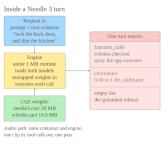
Needle 3, from Cactus Compute, is an Apache-licensed foundation model that ships as a single 8 to 29 MB file and runs entirely on phones, wearables, smart home hubs, robots, cars, and microcontroller-class boards. It gives up general chat on purpose: instead of writing prose, it reads your tool schemas, picks the function a request needs, fills the arguments, and returns a calibrated confidence score with every call, plus an empty list when nothing fits, so it refuses rather than guesses. This article walks through how the tool-calling loop works, why the confidence gating is the part worth stealing, how schema constraints become decode-time grammar guarantees, how the layer ladder and quick fine-tuning get a subnetwork onto small hardware, and where it honestly runs out of road. If you want a voice-controlled, offline assistant on a Raspberry Pi, a camera board, or a robot project, this is the closest thing to a practical entry point yet.
Filee Is a 244-Format Offline Converter That Lives in a Drag
- Posted October 22nd 2026, 7:12 PM
-
By Jason
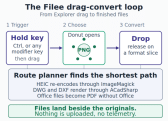
Filee, from developer Myeonggu Kim (KnifeLemon), is a free MIT-licensed desktop converter that turns the routine chore of file conversion into a single gesture: hold a key, drag your files from Explorer, and drop them on a donut of formats that appears at your cursor. It handles 244 formats across images, PDF, Office documents, e-books, video, audio, archives, CAD drawings, fonts and 3D models, works offline with nothing uploaded, plans multi-step conversion routes automatically, and needs no Office, Hancom Office or LibreOffice for the everyday cases. This article walks through how the donut actually works, which formats convert out of the box and which need an optional engine download, and how to bend the command line and watch folders into batch pipelines for maker work like STL, DWG, and raw camera files.
Run ESP32 Firmware Without a Board: Introducing esp32sim
- Posted October 22nd 2026, 12:49 PM
-
By Jason
esp32sim is an open-source emulator written in Rust that runs real ESP32 firmware on your computer or in a browser tab, no board required. It boots the chip's actual mask ROM and bootloader, then your unmodified application image, with emulated displays, touch, LEDs, buttons, audio, camera and WiFi driven by Espressif's own unmodified WiFi library. This article walks through the boot chain, which of the four supported chips are in which state of readiness, the board models, the virtual access point with its NAT, the action scripts and debugging tools, and the honest limits, so you can decide when simulating your next ESP32 project beats flashing a real board.
10 Linux Tweaks I Make on Every New Home Lab Server
- Posted October 9th 2026, 8:58 PM
-
By Jason
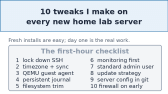
Fresh Linux installs are easy; making them solid on day one is where the real work lives. This is the checklist I work through on every new home lab server before it earns a real job: locking down SSH, getting time sync right, installing the QEMU guest agent for Proxmox, capping the journal, enabling filesystem trim, getting basic monitoring in place, using a standard admin account, picking an update strategy on purpose, putting host config under version control, and turning the firewall on early. None of these take long - most are a couple of commands - and together they prevent the slow-burn problems that show up months later, from clock drift and full disks to mysteries you cannot debug because the logs vanished at the first reboot.
Superpowers: Give Every Coding Agent the Same Disciplined Workflow
- Posted October 7th 2026, 5:32 AM
-
By Jason
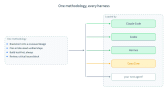
Superpowers is a skills framework and development methodology from Jesse Vincent and Prime Radiant that pushes a brainstorm, plan, test-first build, and review loop onto coding agents, and it survives switching between Claude Code, Codex, and a long list of other harnesses. For anyone running more than one coding agent, that is the pitch worth caring about: your process stops depending on which CLI you happened to open. This article breaks down how its skills fit together, where the structure earns its keep and where it gets heavy, and walks through exact setup steps for Claude Code, Codex, OpenClaw, and Hermes agents, including the community-plugin paths OpenClaw users need because there is no official installer for it yet.